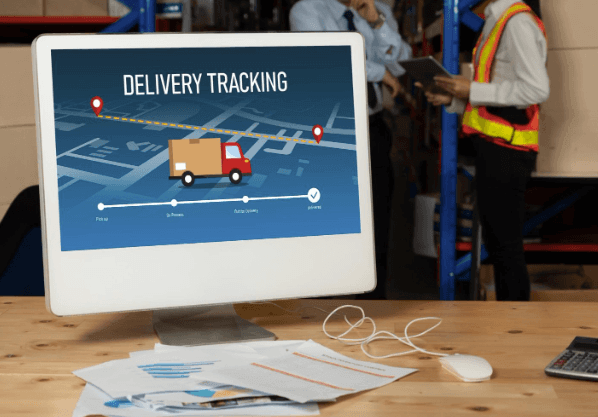
Real-Time Tracking Systems collect and report location and status data as events unfold, delivering immediate visibility. They rely on modular, low-latency cores—streaming, messaging, storage, and processing—to ensure deterministic throughput and scalable resilience. Use cases span retail, logistics, and manufacturing, each with clear metrics and latency targets. Deployment must balance immediacy with privacy and governance. The approach is precise and capable, but trade-offs remain, inviting closer examination of implementation details and outcomes.
What Real-Time Tracking Is and Why It Matters
Real-time tracking is the continuous collection and immediate reporting of location or status data as events occur. It provides actionable visibility across operations, enabling rapid decisions and accountability.
Real time latency matters for responsiveness; data governance ensures accuracy and compliance, while privacy concerns shape controls.
System scalability guarantees sustained performance as data flows increase, preserving reliability and safeguarding freedom through transparent, deterministic measurement.
Core Tech Stack for Real-Time Tracking Systems
The core technology stack for real-time tracking systems combines streaming data platforms, message brokers, storage solutions, and processing engines to ingest, process, and deliver location and status data with minimal latency. It centers on real time data, ensuring deterministic throughput and predictable system latency, while offering modular components chosen for scalability, resilience, and freedom to evolve without sacrificing performance.
Key Use Cases Across Industries and Their Metrics
Key use cases across industries reveal how real-time tracking systems convert streams of location and status data into actionable insights, with metrics that emphasize latency, throughput, and reliability.
Across retail, logistics, and manufacturing, foot traffic patterns, inventory parity checks, real time analytics, and cross border logistics optimization drive operational transparency, timely decision making, and measurable performance improvements.
Challenges, Privacy, and Best Practices for Deployment
While deploying real-time tracking systems, organizations confront trade-offs between immediacy and privacy, as well as the operational demands of reliable performance at scale.
The discussion highlights privacy concerns, governance, and ethical safeguards, ensuring transparency and consent.
Deployment scalability requires modular architectures, rigorous testing, and secure data handling, balancing stakeholder rights with innovation.
Prudent implementation supports compliance, resilience, and user trust without unnecessary compromise.
Frequently Asked Questions
How Do Real-Time Tracking Systems Handle Data Ownership?
Data ownership is defined by contractual and legal terms, with clear delineation between providers and users; privacy controls govern access, retention, and usage, ensuring compliant, auditable data handling while preserving user autonomy and freedom to determine data sharing boundaries.
What Are the Costs of Scaling Real-Time Tracking?
Opposed futures drift like a weathered compass; scaling costs rise with volume, latency, and orchestration. Data pipeline efficiency determines resilience, costs, and speed, shaping autonomous freedom while balancing investments, architecture, and operational discipline in real-time tracking ecosystems.
How Is Data Quality Ensured in Real-Time Streams?
Data quality is maintained in real time streams through validation, monitoring, and retry logic, while clear ownership costs, adherence to regulations, and explicit failure modes prevent erosion of reliability for audiences seeking freedom.
Which Regulations Govern Real-Time Geo-Tracking Data?
“Regulations govern real-time geo-tracking data.” They include data privacy laws and cross-border transfers frameworks; applicable regimes depend on jurisdiction, data subjects, and destination. Compliance requires precise, timely handling, with deterministic controls compatible with freedom-oriented expectations.
See also: Real-Time Processing Explained
What Are Common Failure Modes in Real-Time Tracking Systems?
Common failure modes include latency spikes and sensor drift, which undermine timeliness and accuracy; systems experience intermittent outages, clock skew, data loss, and synchronization errors, all requiring robust fault tolerance, monitoring, and deterministic recovery protocols for dependable operation.
Conclusion
Real-time tracking systems deliver instantaneous visibility, enabling rapid decision-making and accountable operations across sectors. By integrating streaming cores, brokers, storage, and processors, they achieve deterministic throughput and scalable resilience while balancing privacy and governance. Precision, latency, and reliability remain the north stars, guiding deployment and measurement. Like a precision clockwork mechanism, each component synchronizes to produce a coherent, timely picture—reducing uncertainty, accelerating action, and sustaining trust through transparent data handling and secure practices.