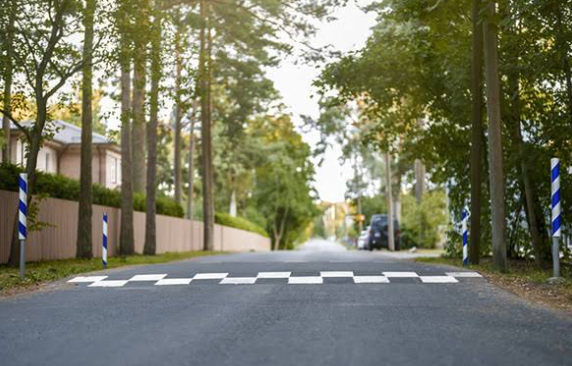
Worn Markings Turn a Traffic Calming Feature Into a Hidden Hazard
A speed bump that drivers cannot see at dusk has stopped doing its job and started creating risk instead. Parking lots, apartment complexes, and commercial campuses across Utah install these raised features to slow traffic and protect pedestrians, but asphalt and paint degrade fast under sun exposure, snowplows, and constant tire friction. Within a year or two, the bright yellow or white stripes that once signaled caution fade into a dull gray that blends with the surrounding pavement.
Property managers often notice the physical bump long before they notice the paint has disappeared. That gap in attention is exactly where accidents happen. A vehicle approaching at normal speed, unaware of an unmarked rise ahead, can suffer suspension damage or jolt passengers hard enough to cause injury. For pedestrians crossing nearby, the absence of clear visual cues removes one more layer of protection in spaces already crowded with moving cars.
Matching Coating Choices to Utah’s Climate Swings
Addressing the issue starts with recognizing that not all paint systems hold up the same way in a state that swings from icy winters to intense summer UV exposure. Many property owners turn to speed bump painting as a targeted fix, since a properly applied coating system is formulated to resist the freeze-thaw cycles and road salt that chew through standard paint within a single season. The right approach isn’t just about brightness on day one; it’s about how the markings perform after six months of plows and de-icing chemicals.
Professional crews typically begin by pressure washing the bump to remove oil residue and loose debris, since paint applied over a dirty surface peels within weeks regardless of quality. From there, a reflective or high-visibility pigment gets applied in even coats, often with a second pass to reinforce edges that take the most wear from tire contact. Drying time matters too, and rushing this step undermines everything that came before it, leaving a surface that looks fine until the first hard rain lifts it away.
What to Confirm Before Signing Off on a Restriping Job
Before approving a vendor, ask specifically about the paint’s durability rating and whether it includes reflective additives suited for low-light visibility, since a contractor who can’t answer this clearly may be using generic traffic paint not built for raised surfaces. Request a timeline for how long the markings are expected to last under local conditions, and get that commitment in writing if possible. A reputable crew will also inspect the bump itself for cracking or erosion, since paint applied over a deteriorating structure only masks a problem that will resurface within months.
Visibility standards matter beyond simple aesthetics, particularly for properties that serve visitors with mobility limitations or visual impairments. The ADA National Network accessibility resources offers guidance on how color contrast and tactile cues support safer navigation for people with disabilities, and that framework is worth reviewing when planning any striping project tied to accessible parking routes. Contrast ratios between the bump and surrounding pavement, along with consistent placement of warning markings, can make a real difference for pedestrians who rely on visual cues to judge elevation changes.
Cost comparisons are useful but should never be the only factor in the decision. A cheaper paint job that fades within four months ends up costing more once labor and materials are factored into a second or third application within the same year. Ask for references from similar properties in the area, ideally ones that have gone through at least one winter since the work was completed, since that’s the real test of whether a coating system holds up under Utah conditions. Property managers who build this evaluation into their regular maintenance calendar tend to avoid the scramble that comes with a sudden complaint or, worse, an incident report.