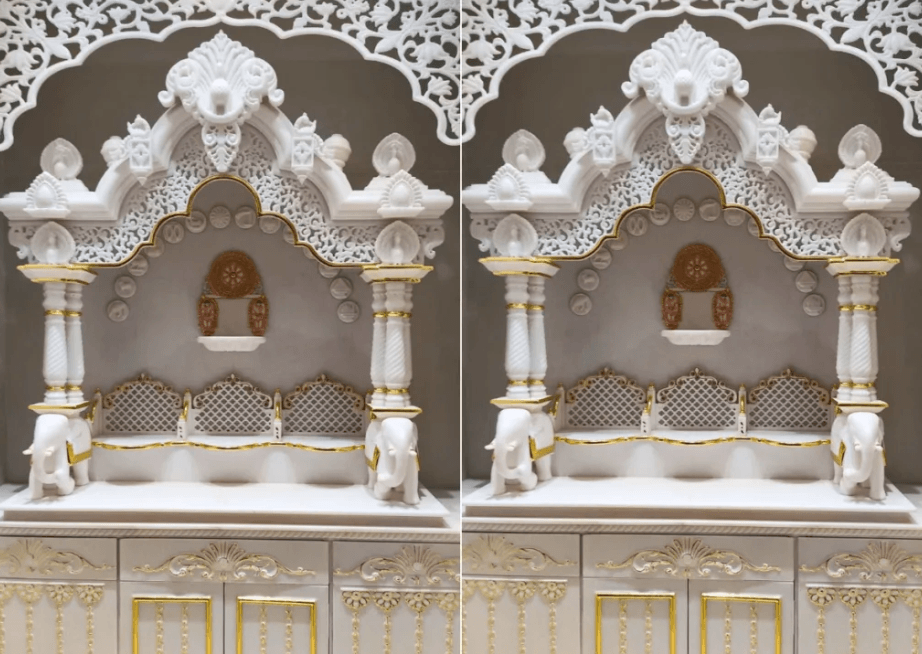
A marble temple is rarely just an object placed in a room. For most families, it is the emotional and spiritual centre of the home, the space where rituals begin, where silence feels different, and where the weight of ordinary days lifts slightly. The quality of carving on that temple determines, more than almost anything else, how that space actually feels.
What separates a meaningful sacred space from a forgettable one is rarely the size of the structure or the floor it stands on. Choosing a skilled marble temple manufacturer who understands the language of devotional carving means the difference between a piece that commands reverence and one that simply occupies space. The carvings are not decoration. They are the conversation the temple has with you.
When Stone Speaks: The Spiritual Weight of Carved Detail
The Energy Embedded in Every Chisel Mark: Carvings on a marble temple are not purely aesthetic choices. Each motif, whether a lotus border, a deity’s expression, or a geometric pattern along the spire, carries layers of meaning accumulated over centuries of devotional tradition. When these elements are executed with skill, they create a visual rhythm that draws the eye inward and slows the mind in exactly the way a sacred space should.
Why Surface Depth Changes Everything: A temple with shallow, machine-pressed detailing registers differently to the eye than one carved by hand. The interplay of light across bas-relief carving, the way a shadow falls into the curve of a petal or the recess of a robe, gives the surface a living quality that flat finishes cannot replicate. This is the detail that makes a person pause before beginning their prayers.
Gods, Saints, and Symbols: Why Personalisation Runs Deeper Than Preference
The Difference a Chosen Deity Makes: When a temple is carved to feature a specific deity, one that holds personal or family significance, the relationship between the devotee and the space shifts entirely. You are no longer praying in front of a generic structure. You are facing a form that was made specifically for your practice, and that specificity matters in ways that are difficult to articulate but immediately felt.
Patterns That Connect Form to Cosmos: The geometric patterning found on traditional marble temples is rarely decorative in origin. Much of it draws from sacred geometry, a design language rooted in cosmological principles that temple architects have used across cultures for centuries. These proportions and patterns are not chosen arbitrarily. They reflect a belief that the physical structure of a sacred space should mirror the order underlying creation itself.
Symbols That Anchor a Family’s Tradition: The choice of sacred symbols in a marble temple is worth careful thought. Some of the most meaningful elements to consider include:
- Lotus motifs: Representing purity and spiritual emergence, these carvings appear across traditions and regional styles, making them one of the most enduring choices in temple design.
- Deity panels: Carved reliefs depicting revered figures or scenes from sacred texts personalise a temple to a specific devotional lineage rather than a general aesthetic.
- Kalash and spire forms: The crown of the temple, whether a shikhar or sanctum dome, carries directional and spiritual significance rooted in classical architectural tradition.
- Border and pillar patterns: Repeating geometric sequences along the base and columns are among the most visually precise elements of a carved marble temple, demanding both skill and mathematical consistency from the craftsman.
The Shift That Happens When Your Temple Is Made for You
From Object to Anchor: There is a measurable difference in how people engage with a space designed around their beliefs versus one selected from a catalogue. A customised marble temple becomes an anchor point in the home, a fixed reference that shapes how the surrounding rooms feel. Families find that rituals feel more grounded, more intentional, and more consistent when the physical space reflects their specific devotional identity.
Material and Carving as a Single Decision: The choice of Vietnam White Marble for temple construction is not incidental to carving quality. Its fine crystalline grain allows artisans to work with a precision that coarser stones simply resist. Detailed facial expressions on deity carvings, the delicate undercutting of floral borders, the crisp geometry of pillar capitals: all of these depend on a material that holds fine detail without fracturing.
Craftsmanship That Knows Its Subject
Designers Who Have Seen What They Build: The quality of a custom temple carving depends not only on technical ability but on the depth of understanding behind the design brief. When designers are trained in sacred space aesthetics and introduced to regional styles of temple architecture, the output reflects that knowledge clearly. It shows in the proportions, in the hierarchy of visual elements, and in small decisions a generalist would miss.
What a Structured Design Process Produces: A well-considered temple carving process begins long before any chisel meets stone. It starts with understanding the home, the family’s tradition, the space available, and the deities or symbols that matter. From there, a design is built, not borrowed from a standard form. That process, when followed rigorously, produces temples that feel inevitable rather than installed.
See also: Creating a Stunning Water Garden: How Garden Fountain Pumps Improve Your Landscaping
Where Devotion Finds Its Form
A carved marble temple done well is not something you grow accustomed to. It is something you return to differently each time, because the details were made to be noticed. The deity at its centre was chosen, the borders were carved for a reason, and the stone holds it all without effort. If you are considering a marble temple for your home, take the time to seek out artisans who understand both the material and the tradition it serves.